Written By Daniel J. Pavlik, Jr., D.C.
Neck pain is common, and most of the time it comes from something simple like poor posture, sleeping in an awkward position, stress, overuse, or a mild muscle strain. Neck pain is in fact one of the most common musculoskeletal complaints worldwide, affecting an estimated 203 million people globally in 2020. But not all neck pain should be brushed off.
The key question is whether your neck pain is staying local and getting better, or spreading, worsening, or causing other symptoms. A simple muscle strain usually improves with time and basic self-care. Knowing when neck pain is serious means recognizing the signs that point to something more, like pain that travels into the arm, numbness or weakness, pain after an injury, or fever, severe headache, balance problems, or bladder and bowel changes.
Key Takeaways
- A simple neck strain usually causes localized soreness, tightness, or stiffness that improves within one to three weeks.
- Pain that shoots, burns, tingles, or travels into the shoulder, arm, hand, or fingers may involve a nerve.
- Weakness, clumsiness, loss of grip, balance problems, or trouble walking are warning signs that need evaluation.
- Neck pain after a car accident, fall, sports injury, or other trauma should not be ignored.
- Fever, severe headache, confusion, or rigid neck stiffness can signal a medical emergency.
- Neck pain with bladder or bowel changes needs urgent medical attention.
- Pain that keeps getting worse or lasts more than one to two weeks without improvement is worth getting checked.
What a Simple Neck Strain Usually Feels Like
A typical neck strain shows up as pain in the muscles of the neck, upper shoulders, or upper back. It often feels like a dull ache, tightness, stiffness, soreness, or a knot, and it tends to get worse when you turn or tilt your head. It usually follows something ordinary, like sleeping in an awkward position, looking down at a phone too long, poor posture, stress-related tension, carrying a heavy bag on one shoulder, or overdoing an activity.
A simple strain stays close to the neck and nearby shoulder muscles, and it should start improving with gentle movement, rest from irritating activities, heat or ice, and better posture. If the pain is local and steadily improving, it is more likely a muscle strain than anything serious.
The Signs Your Neck Pain May Be More Than a Strain
Some symptoms suggest the problem involves a nerve, disc, joint, spinal cord, infection, or injury. We regularly see patients at Pavlik who’ve been managing tingling in the arm for months, assuming it was a pulled muscle, only to find a herniated disc on imaging.
These neck pain signs do not always mean something dangerous, but they do mean the pain deserves closer attention.
Pain travels into your shoulder, arm, or hand
Muscle strain usually stays near the neck, so pain that spreads is different. Be alert if the pain shoots down the arm, burns, feels electric, or travels into the shoulder, elbow, hand, or fingers, especially with tingling or pins and needles. This can happen when a nerve in the neck is irritated or compressed, often from a herniated disc or bone spur. A useful rule of thumb is that local soreness is more likely muscular, while radiating pain is more likely nerve-related.
You have numbness, tingling, or weakness
Persistent or spreading numbness or tingling in the arm or hand should not be ignored. Watch for numb fingers, tingling in one arm, a weak grip, dropping objects, or one side feeling weaker than the other. These can mean the nerves are affected, and if weakness is sudden, severe, or worsening, seek medical care quickly.
Your balance or walking feels off
Neck pain is more concerning when it comes with changes in coordination, balance, or walking. Feeling unsteady, tripping more often, heavy or stiff legs, clumsy hands, or trouble with small tasks like buttoning clothes can sometimes point to pressure on the spinal cord rather than a sore muscle, and that needs evaluation.
The pain started after an injury
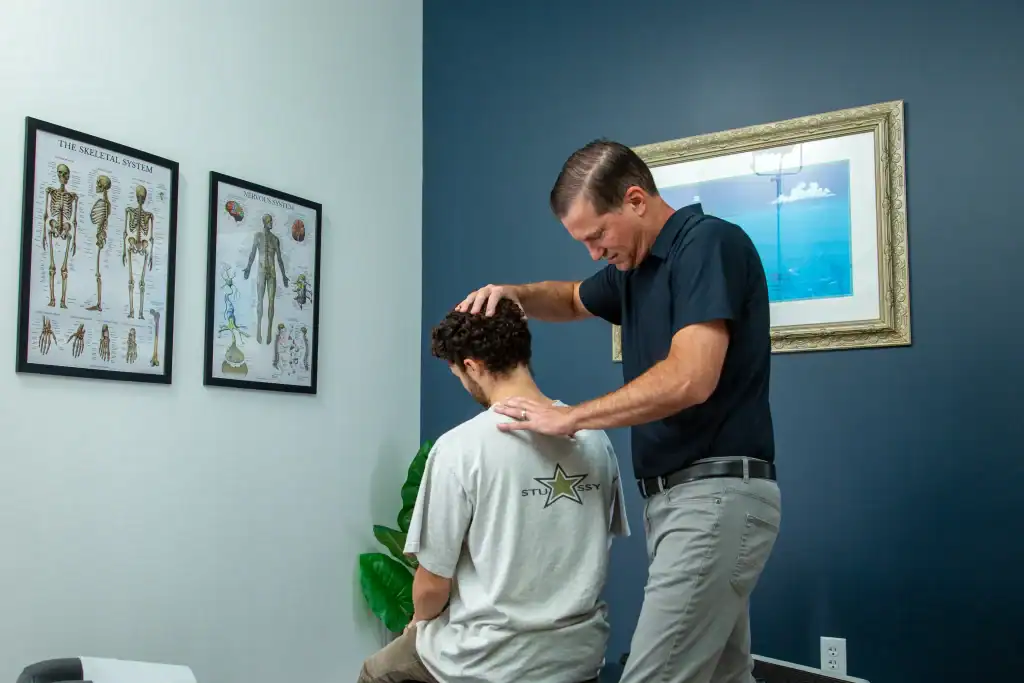
Neck pain after trauma should be taken seriously, including after a car accident, fall, sports collision, or any direct hit or whiplash-type movement. Some injuries hurt right away while others feel worse hours later as inflammation builds. If your pain started after a significant impact, do not assume it is only a strain, especially if you also have headache, dizziness, numbness, weakness, or severe stiffness.
You have fever, severe headache, or rigid neck stiffness
Neck pain with signs of illness can be serious. Seek urgent care if it comes with high fever, severe headache, confusion, light sensitivity, nausea, rash, or extreme stiffness that makes it hard to bend the neck forward. A stiff neck with fever and severe headache can be a warning sign of infection such as meningitis, which is not something to monitor at home.
The pain is constant, worsening, or worse at night
Most strains improve over time, so pain that keeps worsening or does not ease with rest deserves attention. Get checked if your neck pain is constant and severe, wakes you from sleep, does not improve with position changes, or comes with unexplained weight loss, night sweats, or a history of cancer. These are less common but can point to a deeper issue.
You notice bladder or bowel changes
Neck pain with new bladder or bowel problems is a serious warning sign. Seek urgent care if you have neck pain along with new loss of bladder or bowel control, trouble urinating, numbness or weakness in the limbs, or worsening balance, as these may suggest significant pressure on the spinal cord.
When You Can Usually Monitor Neck Pain at Home
You may be able to monitor neck pain at home if it is mild to moderate, stays in the neck and shoulders, does not follow a major injury, and comes without numbness, tingling, weakness, fever, or severe headache. If your symptoms are improving and the pain seems tied to posture, sleep position, or overuse, basic self-care often helps.
For mild strain, try gentle movement instead of complete rest, short breaks from screens, keeping your phone and monitor near eye level, ice early if the pain is new, heat for tight muscles, gentle range-of-motion movement, and sleeping with your neck in a neutral position. Avoid staying completely still for too long, since gentle movement usually helps prevent stiffness from worsening.
When to See a Provider, and When It Is an Emergency

Schedule an appointment with a healthcare provider if neck pain lasts more than one to two weeks without clear improvement, keeps coming back, spreads into the shoulder or arm, comes with lingering tingling or numbness, interferes with sleep or work, or is slowly getting worse. You do not need to panic, but persistent or spreading symptoms should be evaluated.
Seek urgent or emergency care, however, if neck pain follows serious trauma or comes with sudden weakness, trouble walking, loss of bladder or bowel control, fever and severe headache, confusion, rigid neck stiffness, chest pain or shortness of breath, or stroke-like symptoms such as slurred speech or double vision. These may signal something far more serious than a strain and should not wait.
What Could Be Causing Serious Neck Pain?
Neck pain that is more than a strain can have several causes, some common and treatable, others rare but important to catch early. Possible causes include a pinched nerve, a herniated disc pressing on a nerve, arthritis or age-related wear, spinal stenosis narrowing the spine, whiplash from rapid neck movement, infection when paired with fever or illness, and inflammatory forms of arthritis. Rare causes like tumors or blood vessel problems are uncommon, but certain red flags may lead a provider to check for them. The goal is never to self-diagnose, but to recognize when symptoms do not fit the pattern of a simple strain. Chronic neck pain that lingers or recurs is its own reason to get a proper evaluation rather than managing it indefinitely on your own.
What a Provider May Check

If you see a provider for neck pain, they will usually ask when it started, whether there was an injury, where the pain is, whether it travels into the arm, and whether you have numbness, tingling, or weakness. They may examine your neck movement, muscle strength, reflexes, sensation, grip, and balance. Imaging is not always needed right away, but a provider may consider X-rays, CT, or MRI depending on your symptoms, whether there was trauma, and whether there are signs of nerve or spinal cord involvement.
What Not to Do If Your Symptoms Feel Serious
If your pain is severe, spreading, or linked to numbness, weakness, trauma, fever, or balance problems, avoid forceful neck cracking, aggressive stretching, fast neck circles, heavy lifting, and high-impact exercise. Do not push through worsening pain, ignore arm or hand weakness, or wear a neck collar long-term without medical advice. Gentle movement may help a simple strain, but forceful movement can make nerve-related or injury-related pain worse.
Frequently Asked Questions
How do I know if neck pain is muscular or nerve-related?
Muscle pain usually stays in the neck, shoulders, or upper back and feels sore or tight. Nerve-related pain often travels into the arm or hand and may feel sharp, burning, or tingly, sometimes with numbness or weakness.
Can neck pain cause headaches?
Yes. Neck problems can trigger headaches, especially pain that starts near the base of the skull and moves upward, when muscles, joints, or nerves in the upper neck are irritated.
Is tingling in the arm from neck pain serious?
It can be. Brief tingling after sleeping awkwardly may pass, but persistent or worsening tingling may suggest nerve irritation and should be checked, especially with weakness or numbness.
How long is too long for neck pain?
A simple strain should start improving within a few days and continue over one to three weeks. Pain lasting more than one to two weeks without improvement, or that worsens, warrants a medical evaluation.
When is neck pain an emergency?
When it follows serious trauma or comes with sudden weakness, trouble walking, bladder or bowel changes, fever with severe headache, confusion, rigid neck stiffness, chest pain, or stroke-like symptoms.
How Pavlik Health Helps You Get to the Bottom of Neck Pain
So when is neck pain serious? Most neck pain is not dangerous and stays local while it improves. But pain that spreads, causes numbness or weakness, follows trauma, comes with illness symptoms, affects balance, or keeps getting worse may be more than a muscle strain. The smartest approach is to watch the pattern, treat true emergencies as emergencies, and get persistent or unusual pain evaluated rather than guessing.
That evaluation is where Pavlik Health + Wellness comes in. For more than four decades, our Orlando team of chiropractic and medical providers has helped patients pinpoint the real source of neck pain and build a treatment plan to relieve it and restore mobility, rather than masking it. If your neck pain is lingering, spreading, or simply not improving, and it is not an emergency, request an appointment and our team will help you understand what is going on and how to feel better.
If your symptoms match any of the emergency warning signs above, do not wait for an appointment. Seek urgent or emergency care right away.