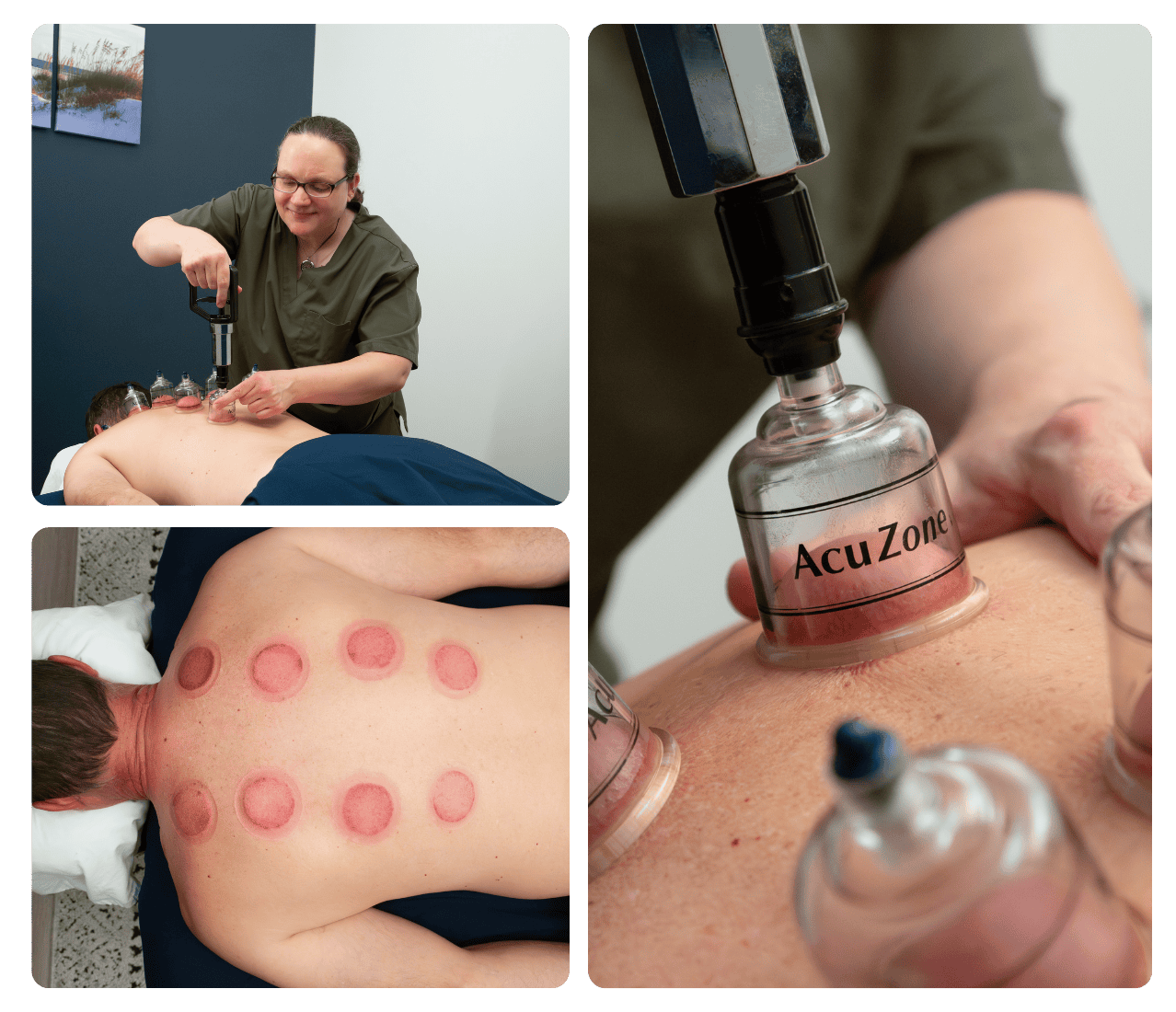
Cupping Therapy in Orlando
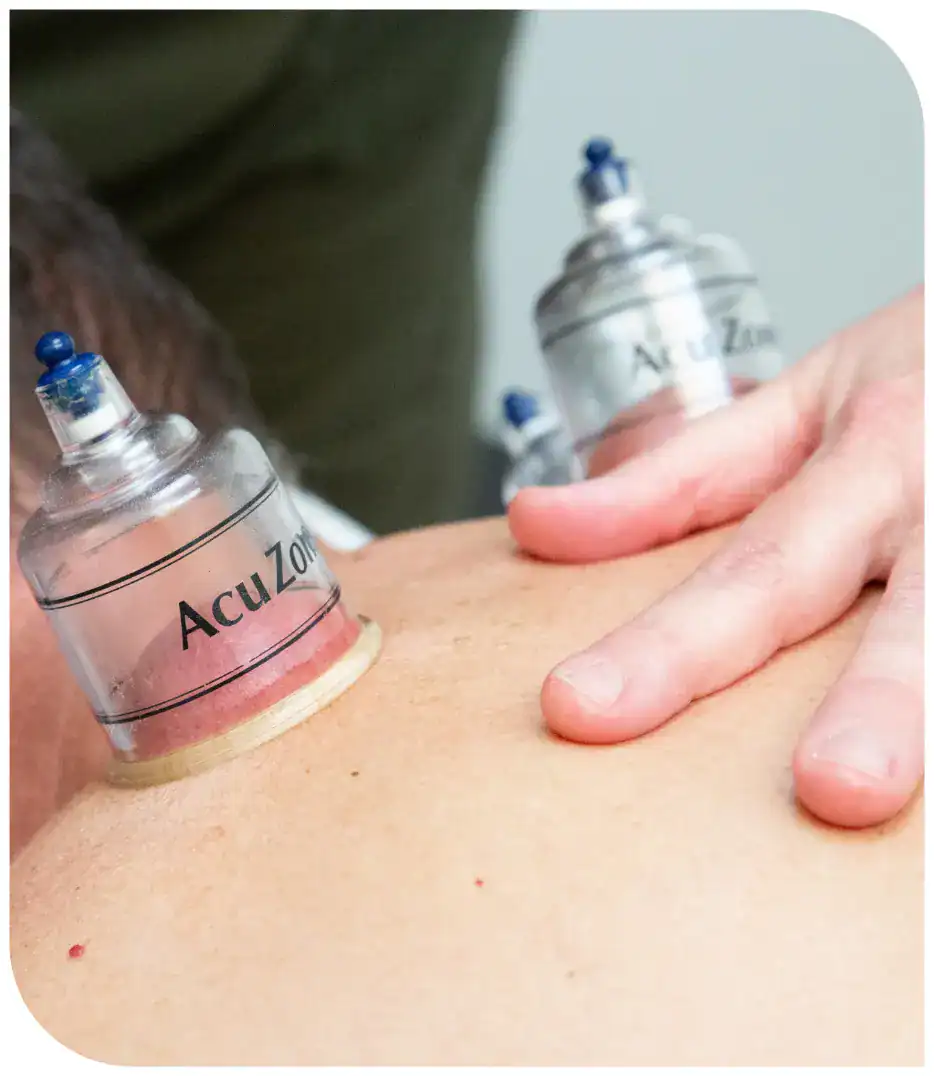
Cupping is a vacuum type massage technique performed with handheld cups. Placing suction cups on the body creates a partial vacuum to reduce tension on the skin and tissues underneath. Cupping creates suction and vacuum pressure to soften tight muscles, loosen adhesions, and enhance blood flow. It helps move deep inflammation to the skin surface, draining excess fluid and toxins. Cupping is most effective on larger muscle areas with a seal between the skin and cup.

Cupping Therapy for Muscle Relaxation and Flexibility
Cupping therapy effectively treats tight muscles by relieving tension without applying excessive pressure. This technique lifts the tissues, allowing muscle fibers to relax and move apart, which enhances flexibility and range of motion. Cupping is also beneficial for treating high muscle tone, which causes stiffness and limits movement. By increasing tissue temperature, boosting blood circulation, and breaking down adhesions, cupping helps reduce muscle tightness and restore normal muscle function.
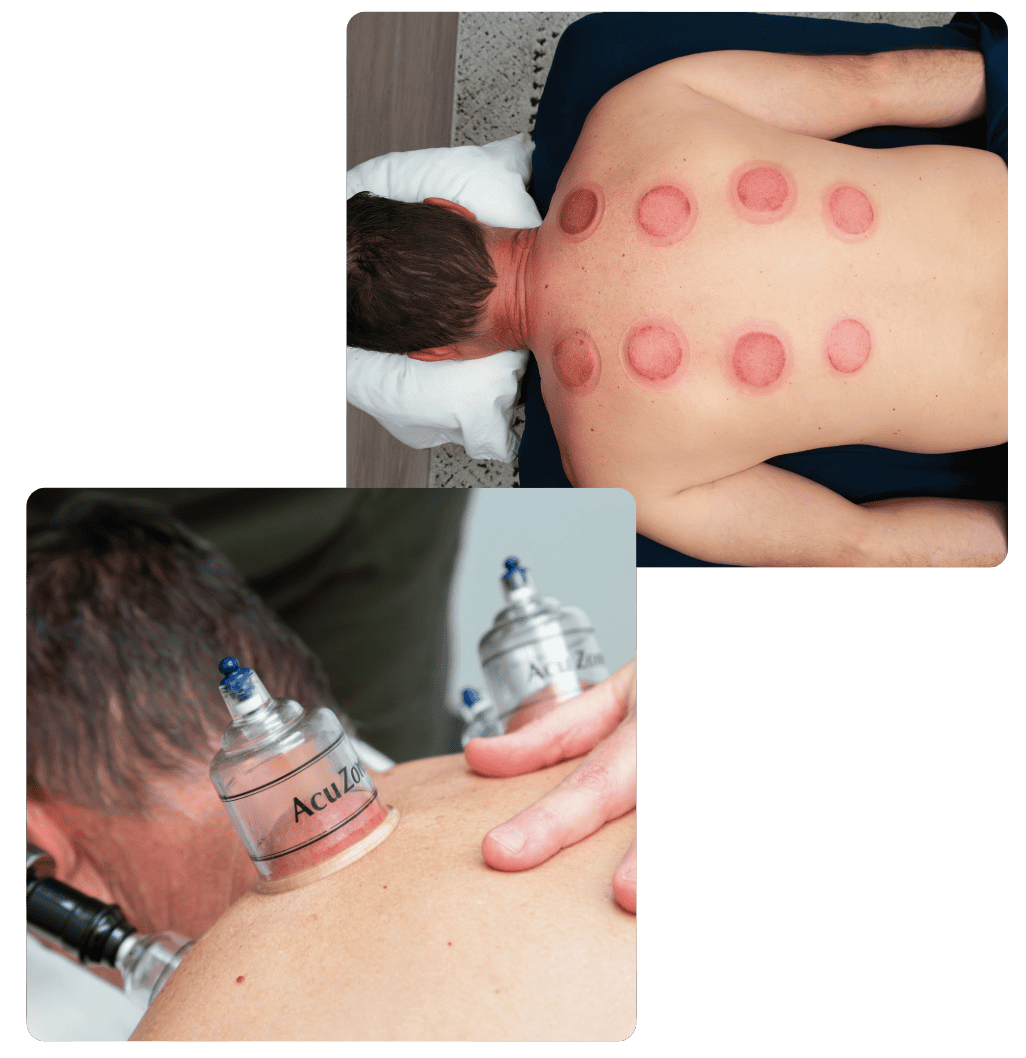

Benefits of Cupping
Cupping is effective after exercise or sports to remove waste products like lactic acid from muscles and tissues. It lifts the tissues, boosting blood flow to drain waste and replace it with oxygen and nutrients, helping reduce muscle soreness and tightness.
- Enhance joint and muscle function
- Improve circulation
- Break down scar tissue adhesions
- Promotes healing process
- Helps remove toxins and stagnated blood
- Improves range of motion
- Loosens tight muscles
- Improves Qi
- Calms nervous system
- Alleviate headaches
- Sports injury recovery

Cupping Therapy FAQs
Our Orlando physicians offer personalized plans for Cupping Therapy treatments.
What is cupping therapy used for?
Cupping therapy is commonly used for muscle tension, back pain, neck pain, shoulder tightness, soreness, stiffness, stress-related tension, and recovery support. At Pavlik Health + Wellness, cupping may be used as part of a broader therapeutic care plan.
Can cupping therapy help with back pain?
Cupping therapy may help some types of back pain, especially when pain is related to muscle tightness, stiffness, or soft tissue tension. If back pain is severe, recurring, or travels into the legs, a provider should evaluate the cause before recommending treatment.
Can cupping help with neck and shoulder tension?
Yes. Cupping may help relieve tightness in the neck, shoulders, and upper back by loosening soft tissue and improving circulation in the treated area. It may be especially helpful for tension related to posture, stress, desk work, or overuse.
Does cupping therapy hurt?
Cupping should not feel severely painful. Most patients feel pulling, pressure, or tightness from the suction. Some temporary tenderness or soreness can happen afterward, especially in areas that were already tight or sensitive.
Why does cupping leave marks?
Cupping can leave round marks on the skin because suction draws blood toward the surface. These marks are usually temporary and are not the same as a typical injury bruise, although they may look similar. They often fade within several days.
How long do cupping marks last?
Cupping marks usually fade within a few days, but they may last longer depending on the amount of suction, the treated area, skin sensitivity, and the person’s circulation. Patients should let their provider know if they bruise easily or have sensitive skin.
Is cupping therapy safe?
Cupping therapy is generally considered safe for many people when performed by a trained provider. However, it may not be right for everyone. A proper evaluation helps determine whether cupping is appropriate for your symptoms, skin condition, and health history.
Who should avoid cupping therapy?
Cupping may not be appropriate for people with certain skin conditions, open wounds, active infections, blood clotting disorders, severe bruising issues, fragile skin, or certain medical conditions. Patients who are pregnant, take blood thinners, or have major health concerns should speak with a provider before receiving cupping.
How often should I get cupping therapy?
The right frequency depends on your symptoms, treatment goals, skin response, and how your body feels after care. Some patients may benefit from occasional sessions, while others may need a more structured plan for recurring muscle tension or pain.