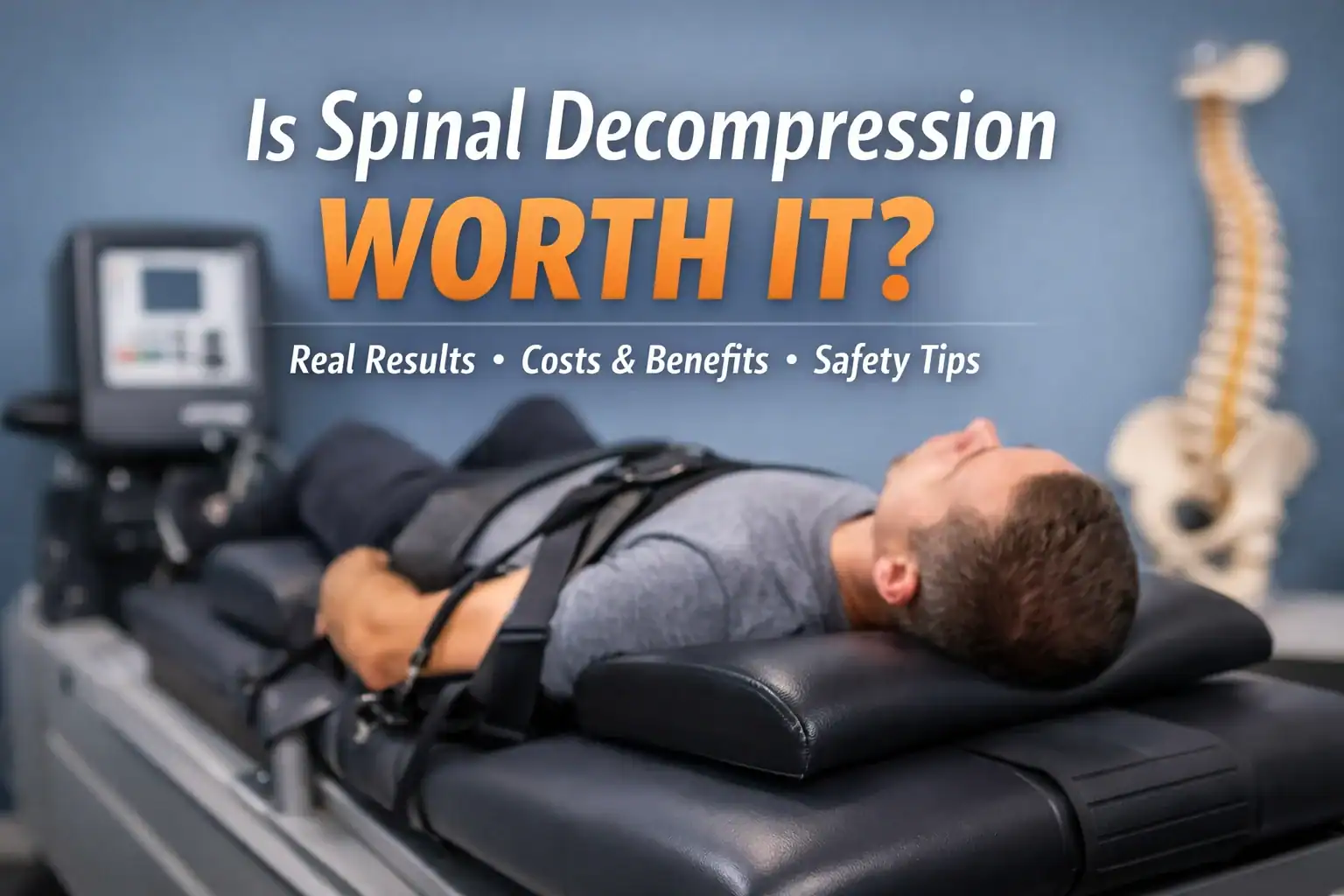
People ask this exact question all the time. The honest answer is not a dramatic yes or no. Spinal Decompression Therapy can be worth it for the right person, especially as part of a bigger plan that also builds strength, improves movement, and reduces flare ups.
What “Worth It” Should Mean for You
A good way to judge value is to look at four things:
- Symptom change
Less pain, fewer sharp “zing” moments, less leg pain, less stiffness - Function change
Walking farther, sitting longer, sleeping better, bending with less fear - Time and cost
How many visits are planned, what the home plan looks like, and what progress should look like by a certain point - Risk and fit
Is it appropriate for your situation, and are red flags ruled out first
When those four line up, decompression often feels like money and time well spent.
Signs decompression therapy might be a good fit
Decompression tends to make the most sense when your symptoms act like “compression sensitivity”:
• You feel worse with prolonged sitting or bending forward
• You feel better after walking or changing positions
• You have back pain with leg symptoms that behave like nerve irritation
• Your goal is to calm symptoms so you can start strengthening and mobility work
Many people describe the best results when decompression is paired with activity changes and rehab habits rather than used alone.
When you should not “try it and see”
Some symptoms need urgent medical evaluation first. The big one to know is Cauda equina syndrome, a true emergency. Warning signs include new trouble controlling bladder or bowels, new saddle area numbness, or major leg weakness. If any of those are present, decompression is not the next step. Immediate evaluation is.
What a reasonable decompression therapy plan looks like
A good decompression plan usually includes:
• A clear exam first, not a one size plan
• A defined trial period with check points
• A home plan that supports the clinic work
• A shift toward active rehab as symptoms settle
Questions to ask before committing
These questions keep things grounded and protect you from vague promises:
• How will progress be measured, pain scale, walking time, sitting tolerance, sleep
• What should change by visit 4 or visit 6
• What home plan is paired with it
• What is the plan if progress stalls
If a clinic can answer those clearly, you are in a better spot to judge value.
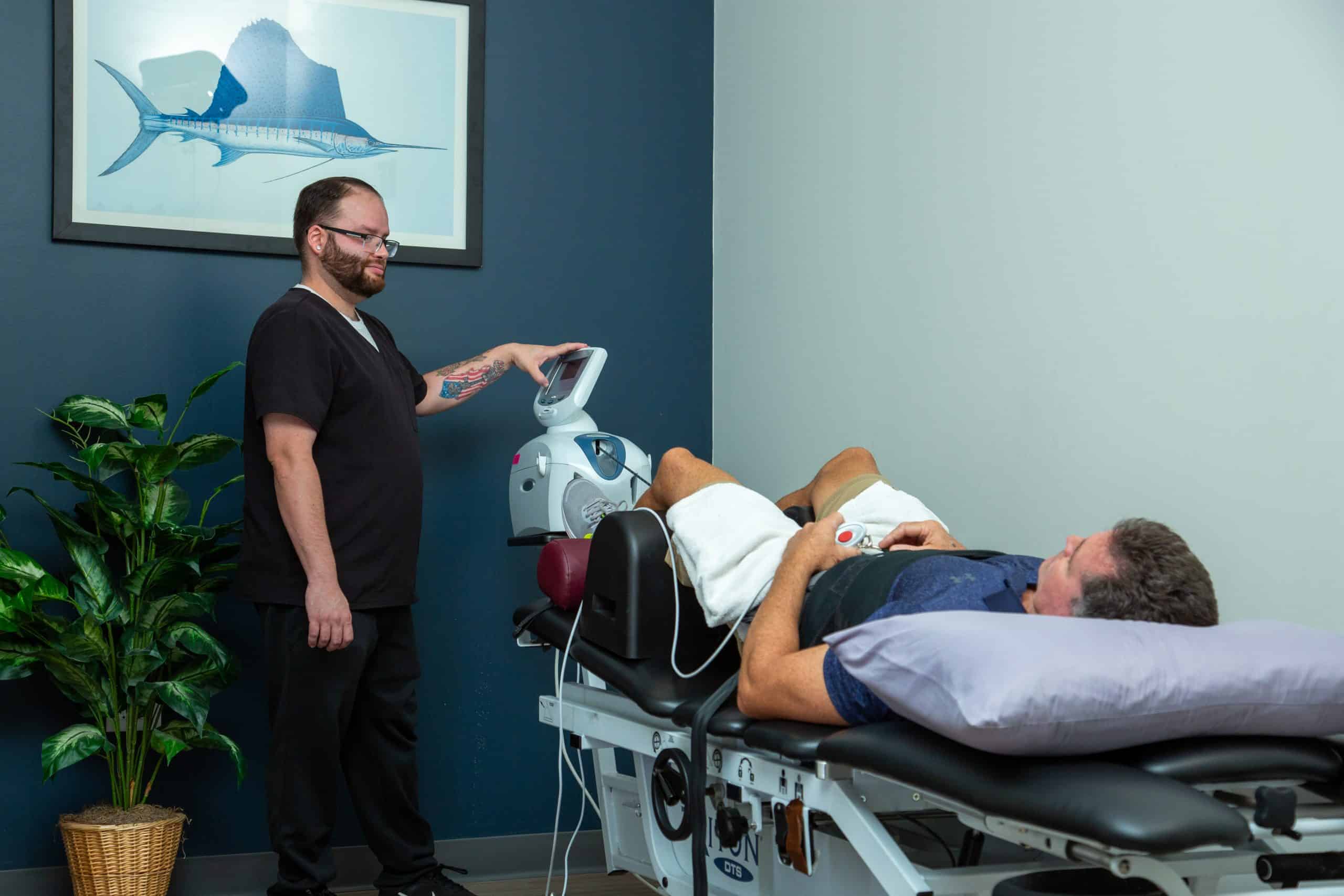
To understand how we approach care and what a session includes, visit our Spinal Decompression Therapy in Orlando
How to make decompression therapy more worth it
Decompression tends to pay off more when you do three simple things alongside it:
- Walk most days
Even 10 minutes helps keep the back from stiffening up - Build basic strength
Glutes, hips, and trunk work, kept pain smart and gradual - Reduce the triggers that keep setting you back
Long sitting blocks, heavy bending bursts, poor sleep patterns
Bottom line
Spinal Decompression Therapy can be worth it when it is used for the right pattern of symptoms, delivered with a clear plan, and paired with active rehab so results last longer than a short relief window.